Sujeevan Ratnasingham
Research
Biodiversity informatics: infrastructure, inference and trust.
My research addresses a practical question: how can biological data at planetary scale be made usable? Usable means interoperable across the institutions that generate it, computable by statistical and machine-learning models, and trustworthy enough to support regulatory and forensic decisions. I approach this from the position of someone who builds and operates the systems in question, so much of the work is empirical: the platforms are the experiments, and the global barcoding community is the user base against which design decisions are tested. The four strands below have developed in sequence over twenty years, and each rests on the previous one.
Biodiversity data infrastructure and standards
DNA barcoding produces a particular kind of data: a short standardised sequence tied to a physical voucher specimen, a taxonomic name, a collection event and a chain of laboratory provenance. In 2005 I designed BOLD to hold all of these together, and to serve simultaneously as a workbench for the laboratories generating the data, a curated reference library for identification, and a public repository (Ratnasingham & Hebert 2007; BOLD v4, 2024). The system has been in continuous production since, through four major versions, and now holds more than 25 million sequences from over one million species contributed by several hundred institutions.
Operating a shared resource at this scale raises questions of standards and governance that I have pursued through the Genomic Standards Consortium (co-author of the MIxS/MIMARKS minimum-information specifications) and, more recently, through the Barcode Core Data Model, an open specification for barcode records with mappings to Darwin Core and MIxS that underlies BOLD's data packages and the BOLDconnectR R package. As Chief Information Officer of iBOL I coordinate data standards and governance across the consortium, and I served on Canada's Advisory Committee on Scientific Data Governance. Current work in this strand concerns how sequence databases can support the UN mechanism for benefit-sharing from digital sequence information.
Algorithmic species registration and taxonomic inference
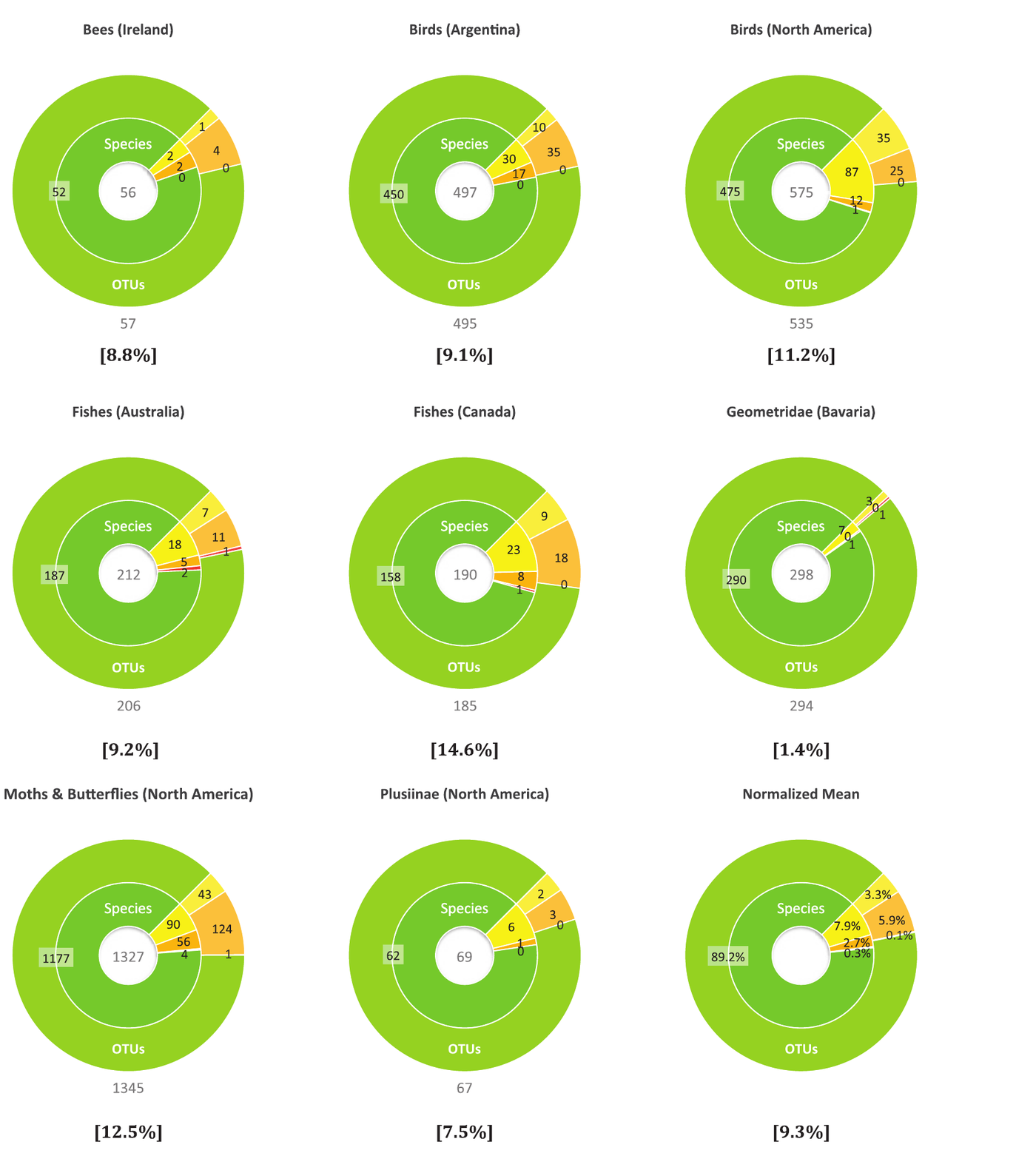
Most animal species have no formal name, and most never will at current rates of description. The Barcode Index Number system (Ratnasingham & Hebert 2013) addresses this by clustering sequences into operational taxonomic units with an unsupervised algorithm and assigning each cluster a persistent identifier, so that undescribed species can be counted, tracked and referenced in the literature before they are named. BINs have since become the working unit for large-scale surveys of arthropod diversity (Hebert et al. 2016) and for estimating the global number of insect species.
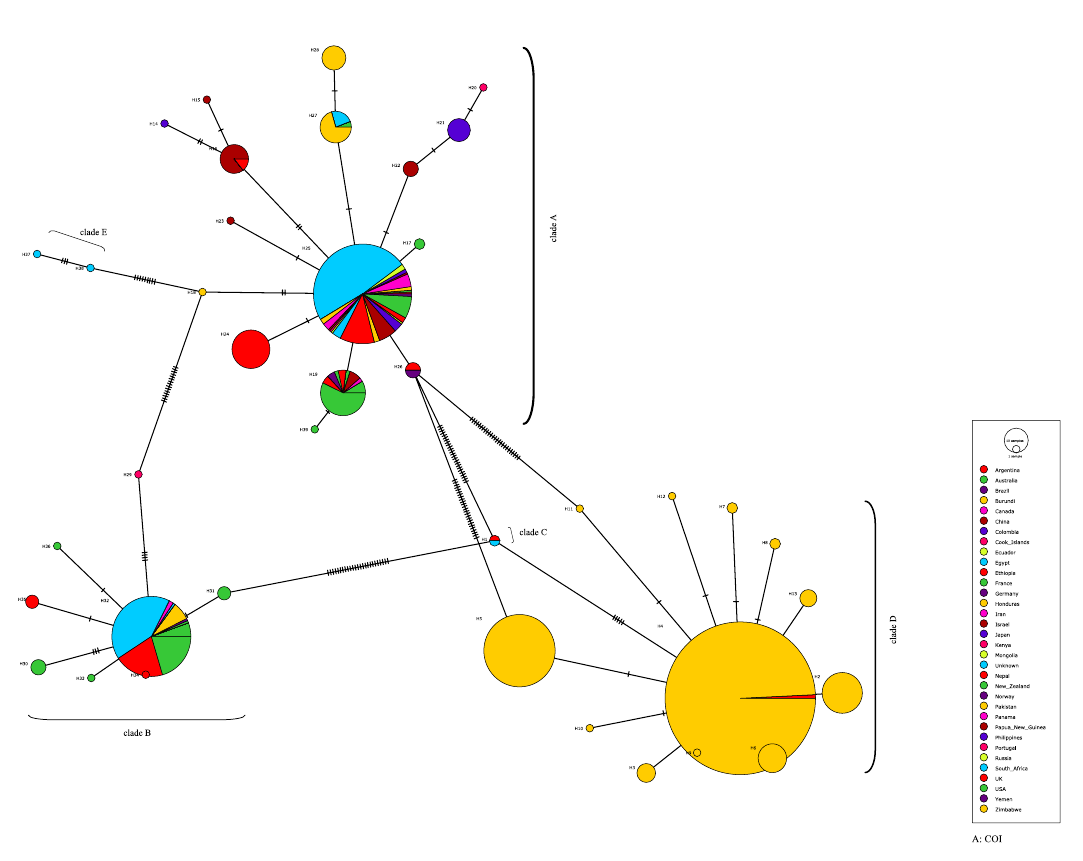
The complementary problem is assignment: placing a new sequence or image within the existing taxonomy when reference coverage is incomplete. With Graham Taylor's group at Guelph we have developed PROTAX-GPU, a scalable probabilistic classifier for barcodes, and released the BIOSCAN-1M and BIOSCAN-5M datasets, which pair barcode sequences with specimen images and taxonomic labels for five million insects, as benchmarks for multimodal representation learning (NeurIPS 2023, 2024). Earlier work in this strand applied machine learning to base-calling and sequence cleaning (IEEE TCBB 2016; the coil and debar packages). The same sequence data also carry population history: in a study of 960 head-louse COI sequences from 25 countries we resolved five deeply divergent clades whose geographic structure tracks early human migration (Ashfaq et al. 2015).
Metabarcoding and biomonitoring
High-throughput sequencing of bulk samples, whether Malaise-trap catches or environmental DNA, turns biodiversity assessment into a data-processing problem. mBRAVE (2019) was built to process such runs against BOLD's reference libraries at scale; it has handled more than 100 TB of data and underpins the Global Malaise Program and national biomonitoring efforts in Canada and elsewhere. Methodological work has examined the reliability of the approach (mock-community metabarcoding; error sources in BOLD and GenBank) and its application to impact assessment (geothermal energy; agro-ecosystems).
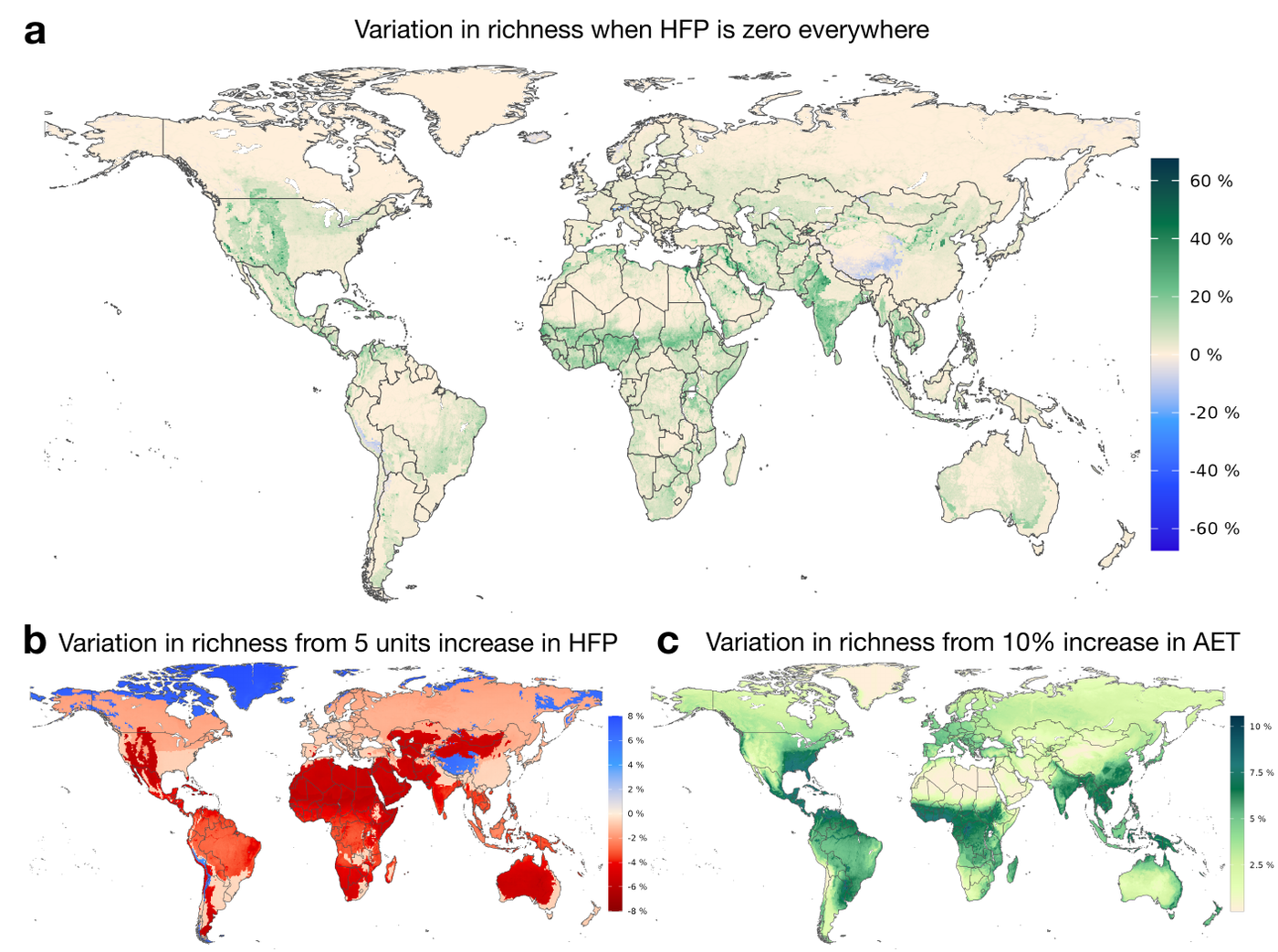
A recurring obstacle is that most species in any such survey are rare. With Otso Ovaskainen's group we introduced CORAL (Nature Methods, 2025), a common-to-rare transfer learning framework that borrows statistical strength from well-sampled species to model the occurrence of a quarter-million rare Malagasy arthropod taxa. Related work uses Malaise-trap data across latitudes to describe the spatial and temporal structure of arthropod beta-diversity. Most recently, with Alessandro Zito, David Dunson and colleagues, we introduced Hubbell regression, a generalised linear model for Hubbell's fundamental biodiversity number that links species-accumulation curves to environmental covariates. Fitted to Global Malaise Trap Program data, it identifies actual evapotranspiration as the dominant driver of arthropod diversity and quantifies the richness lost to human activity in tropical and dry zones.
Knowledge systems and governed AI
The systems above were designed for research communities. Institutions that now depend on them — environmental regulators, customs and wildlife-crime units, food-safety laboratories — need chain-of-custody documentation, auditable pipelines and outputs that hold up in court. My current work, carried out through Biolytica, concerns the layer between raw biodiversity data and defensible institutional knowledge: domain-specific knowledge graphs that preserve provenance, language-model pipelines that run on-premises against those graphs, and validation and expert-review steps built into the workflow rather than added afterwards. BIO·NEXUS is the platform in which this is implemented; it is in regulatory use by government agencies in support of wildlife-crime investigation and prosecution. The applied lineage runs back through LifeScanner and LAB-IN-A-BOX, which brought DNA-based identification to citizen scientists, schools and port-of-entry enforcement.
Current directions
Three questions organise my work for the next several years:
- Connected biodiversity knowledge. National and international biodiversity data remain fragmented across sequence repositories, collections databases, observation networks and grey literature. I am working on federated, AI-queryable knowledge graphs that integrate these sources with explicit provenance, so that reporting obligations (national biodiversity strategies, the Kunming-Montreal framework, the EU Nature Restoration Regulation) can be met from a single, auditable substrate.
- Taxonomic inference at the limits of reference data. Extending PROTAX-GPU, BIN and the BIOSCAN datasets toward foundation models that combine sequence, image and geographic signal, with calibrated uncertainty for species that have no references at all.
- Infrastructure that lasts. BOLD has outlived most of the software written alongside it. I am interested in what makes scientific infrastructure durable — data models, governance, funding structures — and in documenting those lessons for the next generation of platforms.